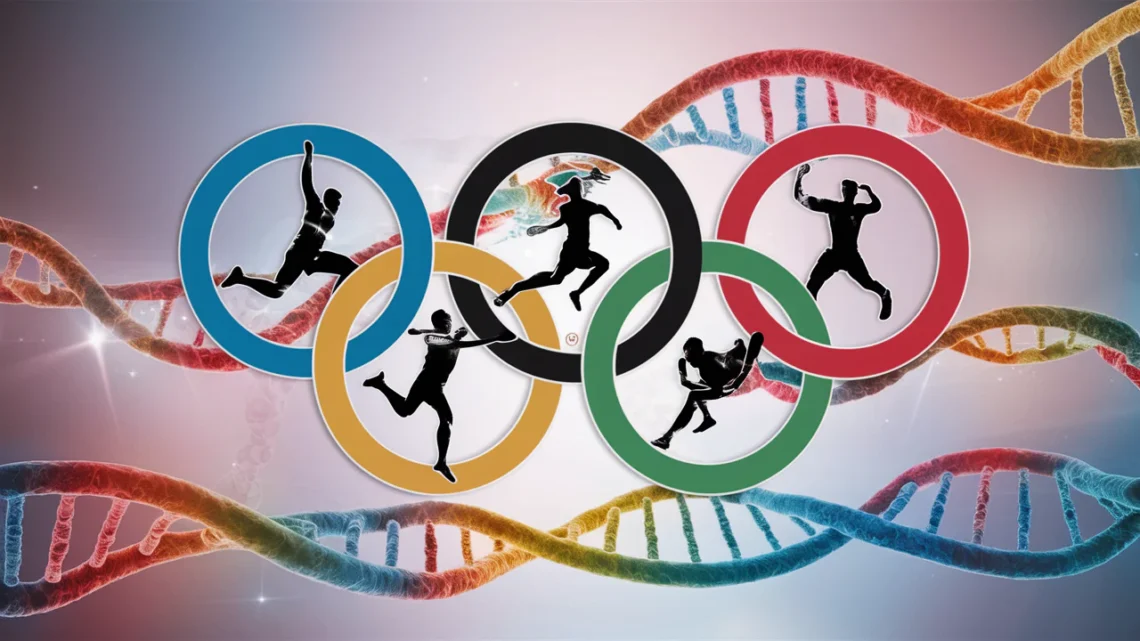
For over a century, the Olympic motto—Citius, Altius, Fortius (Faster, Higher, Stronger)—has been a tribute to the limits of human willpower and natural biology. We cheered for athletes because they represented the pinnacle of what a “normal” human could achieve through grueling discipline and sheer grit.
But as we move through 2026, the definition of “human” is being tested like never before.
The conversation has shifted from shoe technology and swimsuits to the very building blocks of our DNA. With the emergence of the “Enhanced Games”—a televised sporting event with no drug testing—and the quiet advancements in CRISPR in athletics, the sports world is facing an existential crisis. If we can “edit” an athlete to have higher lung capacity or faster-twitch muscle fibers, is it still a sport, or has it become a high-stakes science fair?
The Rise of Gene Doping: Beyond the Needle

In 2026, traditional doping (steroids and EPO) is considered “primitive” tech. The new frontier is genetic engineering in sports, often referred to as “gene doping.”
Unlike a pill or an injection that leaves a chemical trail in the blood, gene editing involves using viral vectors or CRISPR-Cas9 to modify how an athlete’s body functions at a cellular level.
- Myostatin Inhibition: Imagine an athlete whose DNA is tweaked to block myostatin, the protein that limits muscle growth. The result is a “natural” hulk who gains muscle twice as fast as their competitors.
- EPO Gene Insertion: Instead of injecting EPO to boost red blood cells, scientists can insert the EPO gene directly into a player’s DNA, causing their body to permanently overproduce oxygen-carrying cells.
The terrifying reality for regulators like WADA (World Anti-Doping Agency) is that these changes are nearly impossible to detect with standard urine or blood tests, as the body is simply following its “new” instructions.
The Enhanced Games vs. The Traditional Olympics
2026 has seen the first major cultural push for the Enhanced Games. Supported by billionaire venture capitalists, this movement argues that we should stop fighting science and instead embrace it.
The Argument for “Enhanced” Sports: Proponents argue that “natural” sport is a myth. From altitude tents to $500 carbon-plated shoes and personalized nutrition, athletes are already “enhanced.” Legalizing bio-hacking pro athleteswould bring the practice into the light, allowing for medical supervision and safety standards rather than forced secrecy.
The Argument for Preservation: Critics argue that the “humanity” of sports is found in our limitations. If we allow genetic engineering, the winner isn’t the best athlete; it’s the athlete with the best engineering team. This creates a “Bio-Divide” where only wealthy nations can afford the CRISPR treatments necessary to reach the podium.
Future of the Olympics 2026: The Tech-Detection Arms Race
In response to the threat of gene editing, the 2026 athletic season has seen the introduction of “Biological Passports 2.0.”
These are high-tech personal health intelligence profiles that track an athlete’s genetic markers over their entire career. Any sudden “unnatural” spike in performance or a shift in gene expression triggers an immediate investigation. However, as CRISPR in athletics becomes more refined, the changes are becoming more subtle and harder to distinguish from natural evolutionary mutations.
The Ethical Limit: Where Do We Draw the Line?
As a society, we must decide: what is the “Wealthy Chapter” of human performance?
- Therapeutic vs. Performance: If an athlete uses gene therapy to heal a torn ACL faster, is that cheating or healthcare?
- Safety First: Many of these bio-hacks are experimental. The long-term effects of permanent gene alteration could include heart failure, cancer, or immune system collapse.
- The Fan Experience: Will fans tune in to watch a 9.2-second 100-meter dash if they know the runner was “built” in a lab?
Conclusion
The “Bio-Hacked Olympics” are no longer a distant sci-fi trope; they are a 2026 reality. As we push the boundaries of genetic engineering in sports, we are forced to look in the mirror and ask what we value more: the spectacle of the result or the integrity of the process.
The finish line is moving, but for the first time in history, the athletes might be moving faster than our ethics can keep up with.